
APPG hears from parliamentary roundtable on digital sovereignty in the UK
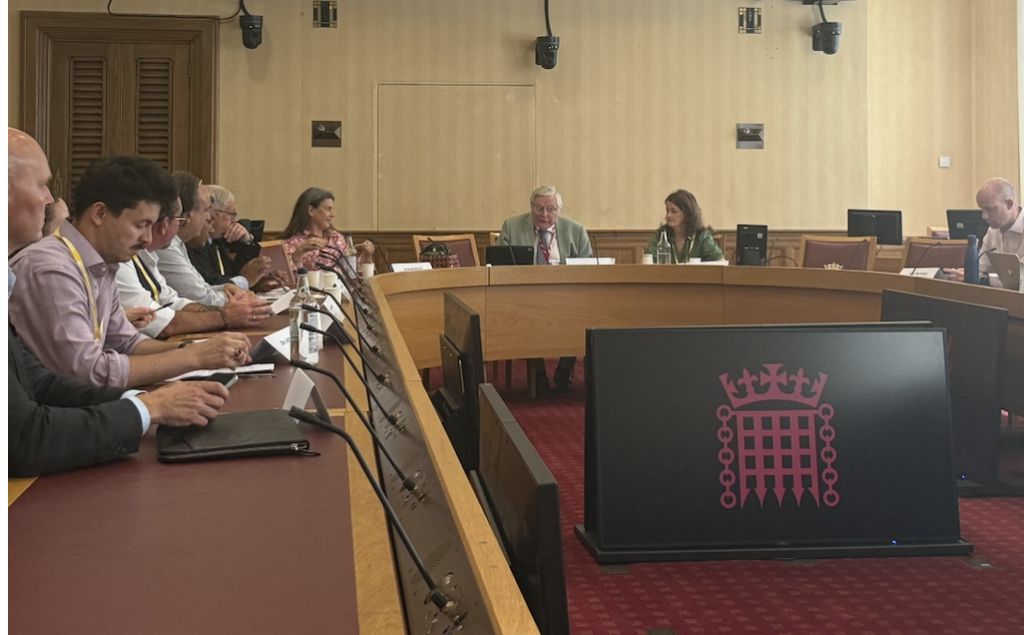
As the UK navigates an increasingly complex geopolitical and technological landscape, questions of digital sovereignty, control over our data, infrastructure and standards have never been more pressing.
Last week, members of the APPG for Cyber Innovation convened a roundtable discussion with industry, academics, and parliamentarians to test working definitions, compare the UK’s position with the EU and other international partners, and identify where policy or governance gaps most need addressing.
The discussion was chaired by Lord Clement-Jones who opened by noting that ‘digital sovereignty’ is a term widely used but without a universal definition, and framed it as the ability of the state to maintain strategic leverage over critical inputs.
The group consensus was that there is no shared UK definition of digital sovereignty. Participants discussed how sovereignty is fundamentally a characteristic of state activity, but the UK by design is deeply enmeshed in a globalised system, making a single coherent definition and policy very hard to reach. It was discussed how there can be three layers to digital sovereignty: technological sovereignty (owning the technology), operational sovereignty (the ability to switch providers) and governance (a UK-specific trustworthy framework).
Open source software was also discussed, where the case was made that open source’s portability and reliance on open standards make it a natural building block for genuinely sovereign and resilient infrastructure, but only if the UK also owns the institutions around it – others cautioned that ‘open’ governance is not a guarantee of neutrality.
Views diverged on EU policy alignment, after the announcement of the EU’s digital sovereignty package in June, with a spectrum of perspectives from the belief that the UK should align closely with the EU’s emerging sovereignty framework, to avoiding over-alignment with the EU. There was a general consensus that EU alignment matters commercially, since international manufacturers have to build to common standards across both UK and EU markets and there is therefore market demand. However, there was disagreement on the extent to which the UK should align with the EU’s digital sovereignty package.
Sovereignty was seen by many delegates as a potential opportunity for economic growth, with the UK having a real strength in governance, even outside of arguments around EU regulatory alignment, with some critical of the tendency to discuss sovereignty only in defensive and resilience terms.
Finally, it was found that no single government department owns the issue. With that in mind, the APPG heard how greater consistency across government departments, potentially through a formalised digital sovereignty strategy/framework, would be beneficial. This is important especially now as the Department of Science, Innovation and Technology’s functions are shared across government.
Lord Clement-Jones, said:
“It was great to hear such a wide range of perspectives on digital sovereignty from industry, academia and think tanks alike. One consensus reached in the room was the need for greater consistency and coherence in the UK’s approach to sovereignty across government departments, whether that takes form as a dedicated digital sovereignty strategy or simply more comprehensive guidance from the government. There is also the broader conversation about where the UK should, and shouldn’t, align with existing frameworks from our international partners, particularly those emerging from the EU. But perhaps most encouragingly was the recognition that digital sovereignty isn’t purely a risk to be managed, but rather a potential future growth sector for UK tech in its own right.”